Prospective Study of Gross and microscopic changes in 146 cases of Cryptorchid Testes at varied locations with particular reference to the incidence of Germ cell Tumors in Biopsy specimens.
Abstract
Background: Cryptorchidism or undescended testis is a commonly observed congenital anomaly of male children seen in patients presenting in general and pediatric surgical practice of our region. In this study, we prospectively studied 146 cases of undescended testis to statistically observe gross and microscopic changes in different such cases.
Objective: To study the gross and microscopic changes in cryptorchid testis at varied locations.
Methods: A hospital-based prospective study of 146 cases of undescended testis was done from November 2014 to December 2019 and the results of gross and microscopic changes in biopsy specimens were statistically analyzed.
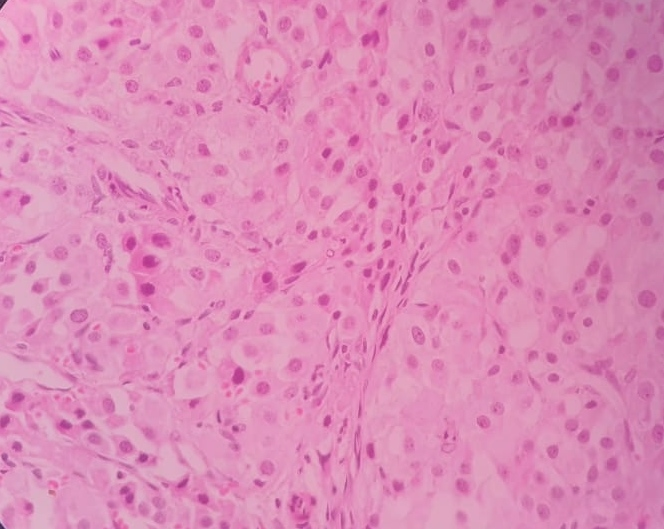
Results: A total of 146 cases studied included 45.19% presenting at the age of 4 to 8 years and 25.34% presenting at the age of 8 to 14 years. The study revealed mild testicular atrophy in 6.16% of the cases and moderate to severe atrophy in 36.97%. Epididymal and vassal anomalies were very rare in suprascrotal testis but common in high cryptorchid testis. Biopsy specimens showed the incidence of seminomas in 4.79% of intra-abdominal testis but the incidence was lesser in undescended testis at locations lower down.
Conclusion: A strong association was observed between the location of cryptorchid testis and observed gross and microscopic changes including malignant transformation.
Downloads
References
2.Frey HL, Raijfer J: Incidence of cryptorchidism. Urol Clin North Am 9:327, 1982.
3.Williams MPL, Huston JM. The history of ideas about testicular descent. Paediatr Surg Int 6:180, 1991.
4.Chilvers C, Pike MC et al: Apparent doubling of frequency of undescended testis in England and wales in 1962-81. Lancet 2:330, 1984.
5.Cortes D, Thorup J: The incidence of maldescneded testis in Denmark. Paed Surg Int 5:2, 1990.
6.Gough MH. Cryptorchidism. Br J Surg 76: 109, 1989.
7.Hedzixelimovic F, Herzog B: Cryptorchidism. Pediatr Surg Int 2:132, 1987.
8.Scorer GC, Farrington GH (1971): Congenital deformities of the testis and the epididymis. Butterworths, London.
9.Candron M, Keating MA, Huff DS, et al: Cryptorchidism – orchidopexy and infertility. A Critical long term retrospective analysis. J Urol 142:559, 1989.
10. Bachhouse KM: Embryology of testicular descent and maldescent. Urol Clin North Am 9:315, 1982.
11. Heyns CF : The gubernaculum during testicular descent in the human fetus. J Anat 153:93, 1982.
12.Hutson J (1994): New insights in testicular descent. Paediatr Surg Int 9:541.
13.Turek PJ, Ewalt DH, Snyder HM et al (1994): Normal epididymal anatomy in boys. J Urol 151: 726-727.
14.Kogan S (1992): Cryptorchidism. In: Kelalis PP, King LR, Belman AB (eds) Clinical Paediatric Urology. WB Saunders, Philadelphia, pp 1050-1083.
15.Mollacian M, Mehrabi V, Elahi B (1994): Significance of edpidymal and ductal anomalies associated with undescended testes: study in 652 cases. Urology 43:857-860.
16.Miliaras D, Koutsoumis G, Vlahakis-Miliaras E (1995): Appendix testis and appendix epididymis:incidental findings in inguinal hernia and cryptorchidism operations. Pediatr Surg Int 10:241-242.
17.Nistal M, Paniagua R et al (1980): Histological classification of undescended testis. Him Pathol 11:674.
18. Lala R, de Sanctis C, Canavese F, Bardini T, Hadziselimovic F (1992). Early medical and surgical treatment of cryptorchidism: clinical , anatomic, and histologic findings. Pediatr Surg Int 7:368-371.
19.Rajfer J, WalshPC (1977): Testicular descent. Original article series. The National Foundation, vol. XII, no. 2:107-122.
20.Thorup J, Cortes D, Nielson OH (1993): Clinical and histopathological evaluation of operated maldescended testes after luteinizing hormone-releasing hormone treatment. Pediatr Surg Int 8:419-422.
21.Akre O., Pettersson A., Ridhiardi L. (20090. Risk of contralateral testicular cancer among men with unilaterally undsecnended testis: a meta analysis. Int. J. Cancer 124, 687-68910.1002/ijc. 23936.
22.Barteczko K. J., Jacob M. I. (2000). The Testicular descent in human. Origin , development and fate of the gubernaculum Hunteri, processus vaginalis peritonei, and gonadal ligaments. Adv. Anat. Embryol Cell. Biol. 156, 1-9810.1007/978-3-642-58353-7_1.
23.Barthold J. S., Gonzalez R. (2003). The epidemiology of congenital cryptorchidism, testicular ascent and orchiopexy. J. Urol 170, 2396-240110.1097/01.ju.0000095793.04232.d8.
24.Batata M.A., Whitmore W.F., Jr., Chu F.C., Hilaris B.S., Loh J., Grabstald H., et al. (1980). Cryptorchidism and testicular cancer . J. Urol. 124, 382-387.
25.Adham I.M., Agoulnik A.I (2004). Insulin-like 3 signalling in testicular descent. Int. J. Androl. 27, 257-26510.1111/j.1365-2605.2004.00481.x
26.Bay K., Main K.M., Toppari J., Skakkebaek N. E. (2011). Testicular descent: INSL3, testosterone, genes and the intrauterine milieu. Nat. Rev. Urol. 8, 187-19610.1038/nrurol.2011.23.
27.Boisen K.A., Kaleva M., Main K. M., Virtanen H. E., Haavisto A. M., Schmidt I. M., et al. (2004). Difference in prevalence of congenital cryptorchidism in infants between two Nordic countries. Lancet 363, 1264-126910.1016/S0140-6736(04)15998-9
28.Chaganti R.S., Houldsworth J. (1998). The cytogenetic theory of the pathogenesis of human adult male germ cell tumours. APMIS 106, 80-83; discussion 83-84.10.1111/j.1699-0463.1998.tb01322.x
29.Clark A. T. (2007). The stem cell identity of testicular cancer. Stem Cell. Rev. 3, 49-5910.1007/s12015-007-0002-x
30.Cortes D., Thorup J., Petersen B. L. (2004). Testicular neoplasia in undescended testes of cryptorchid boys –does surgical strategy have an impact on the risk of invasive testicular neoplasia? Turk. J. Pediatr. 46(Suppl.),35-42.