
Oxalate Crystals In Bone Marrow - A Rare Pathological Insight - Pancytopenia Presenting With Fungal Septicemia In A Patient With Undiagnosed Primary Hyperoxaluria.
PANCYTOPENIA PRESENTING WITH FUNGAL SEPTICEMIA IN A PATIENT WITH UNDIAGNOSED PRIMARY HYPEROXALURIA.
Abstract
Primary hyperoxaluria type 2 (PH2) is a rare autosomal recessive metabolic disorder that can lead to systemic oxalate deposition, particularly in advanced stages. Bone marrow involvement is uncommon and rarely causes clinically significant pancytopenia, though it may increase vulnerability to severe infections in patients with end-stage renal disease (ESRD) on dialysis.
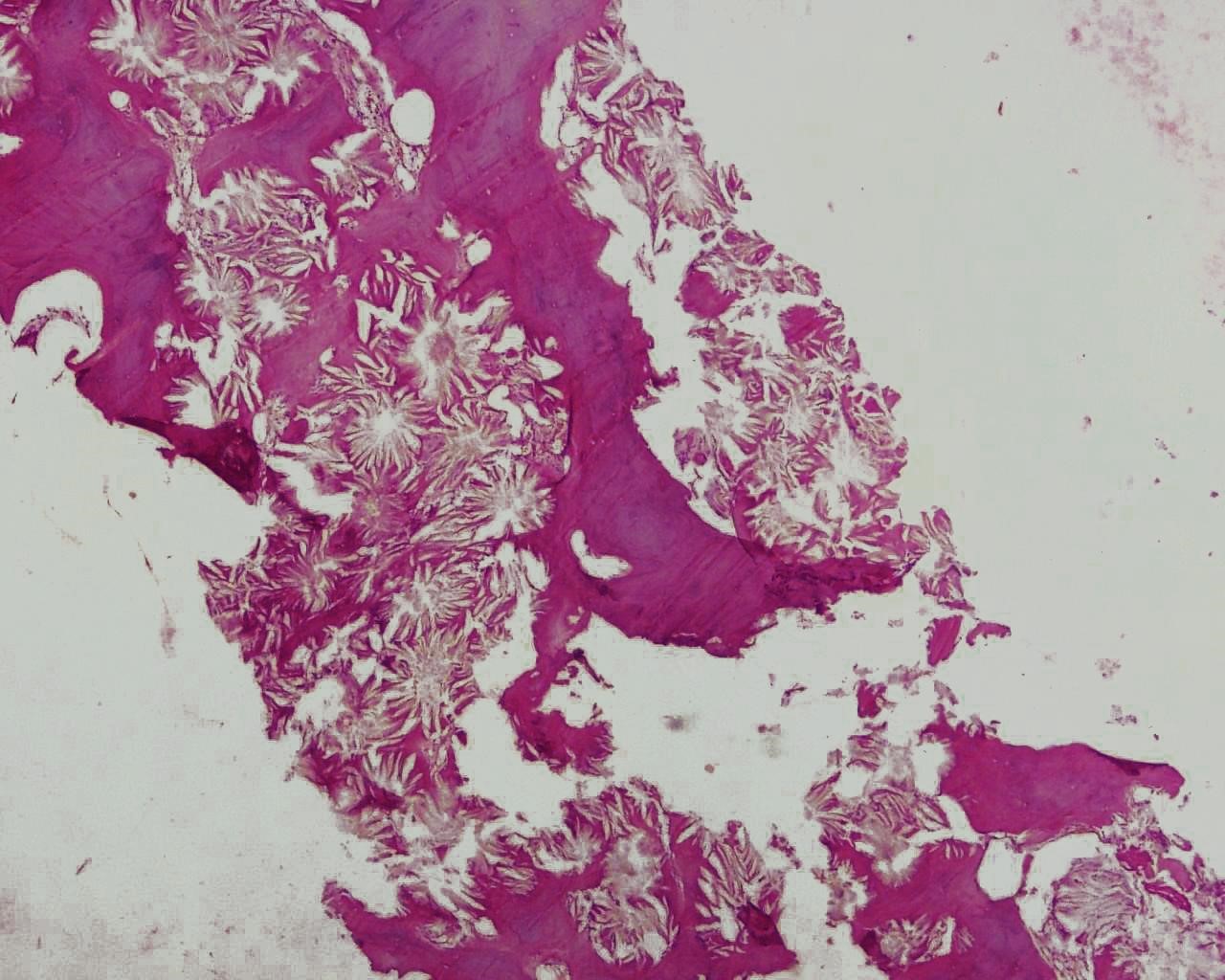
We present a case of a 35-year-old male with PH2 and ESRD who developed fever and pancytopenia. Blood cultures grew Candida parapsilosis, and echocardiography revealed aortic valve vegetation, confirming fungal endocarditis. Bone marrow biopsy showed extensive oxalate crystal deposition replacing hematopoietic tissue. Despite antifungal treatment and catheter removal, the patient suffered an embolic stroke and died.
Bone marrow crystal deposition should be considered in PH2 patients presenting with unexplained pancytopenia. This rare complication can predispose to life-threatening infections, emphasizing the need for timely diagnosis and multidisciplinary management.
Downloads
References
Zhu X, Cheung WW, Zhang A, Ding G. Mutation Characteristics of Primary Hyperoxaluria in the Chinese Population and Current International Diagnosis and Treatment Status. Kidney Diseases. 2024;10(4):313.
Breeggemann MC, Harris PC, Lieske JC, Tasian GE, Wood KD. The Evolving Role of Genetic Testing in Monogenic Kidney Stone Disease: Spotlight on Primary Hyperoxaluria. J Urol. 2024;212(5):649–59.
d’Izarny-Gargas T, Dang J, Grünenwald A, Mechref Z, Besson FL, Ferlicot S, et al. Bone Marrow Oxalosis. Kidney International Reports. 2024;9(4):1139–41.
McCreery RJ, Florescu DF, Kalil AC. Sepsis in Immunocompromised Patients Without Human Immunodeficiency Virus. The Journal of Infectious Diseases. 2020;222(Supplement_2):S156–65.
Kashiv P, Dubey S, Sejpal KN, Malde S, Gurjar P, Pasari A, et al. Young Male With End-Stage Renal Disease Due to Primary Hyperoxaluria Type 2: A Rare Presentation. Cureus. 2023;15(10):e46555.
Hoppe B, Kemper MJ, Bökenkamp A, Portale AA, Cohn RA, Langman CB. Plasma calcium oxalate supersaturation in children with primary hyperoxaluria and end-stage renal failure. Kidney International. 1999;56(1):268–74.
Bhuyan R, Maggio T, Thomas C, Sambharia M, Gehrs K, Boyce T. Late-onset retinal oxalosis in primary hyperoxaluria type 2. American Journal of Ophthalmology Case Reports. 2024;36:102156.
Flückiger U, Marchetti O, Bille J, Eggimann P, Zimmerli S, Imhof A, et al. Treatment options of invasive fungal infections in adults. Swiss Med Wkly. 2006;136(29–30):447–63.

This work is licensed under a Creative Commons Attribution 4.0 International License.


